A business can have a strong product, an attractive website, active social media pages and a growing customer base. But today, people increasingly want to know something beyond the company itself:
Who is the person behind the business?
Customers, employees, partners, investors and collaborators often notice the founder as much as the company. They want to understand the entrepreneur’s ideas, experience, values, decisions and journey.
This is where personal branding for entrepreneurs becomes important.
Personal branding is not about becoming an influencer or sharing every part of your life online. It is about making your expertise, experience and professional point of view easier for people to understand.
For founders, one of the strongest ways to build that visibility is through authentic storytelling.
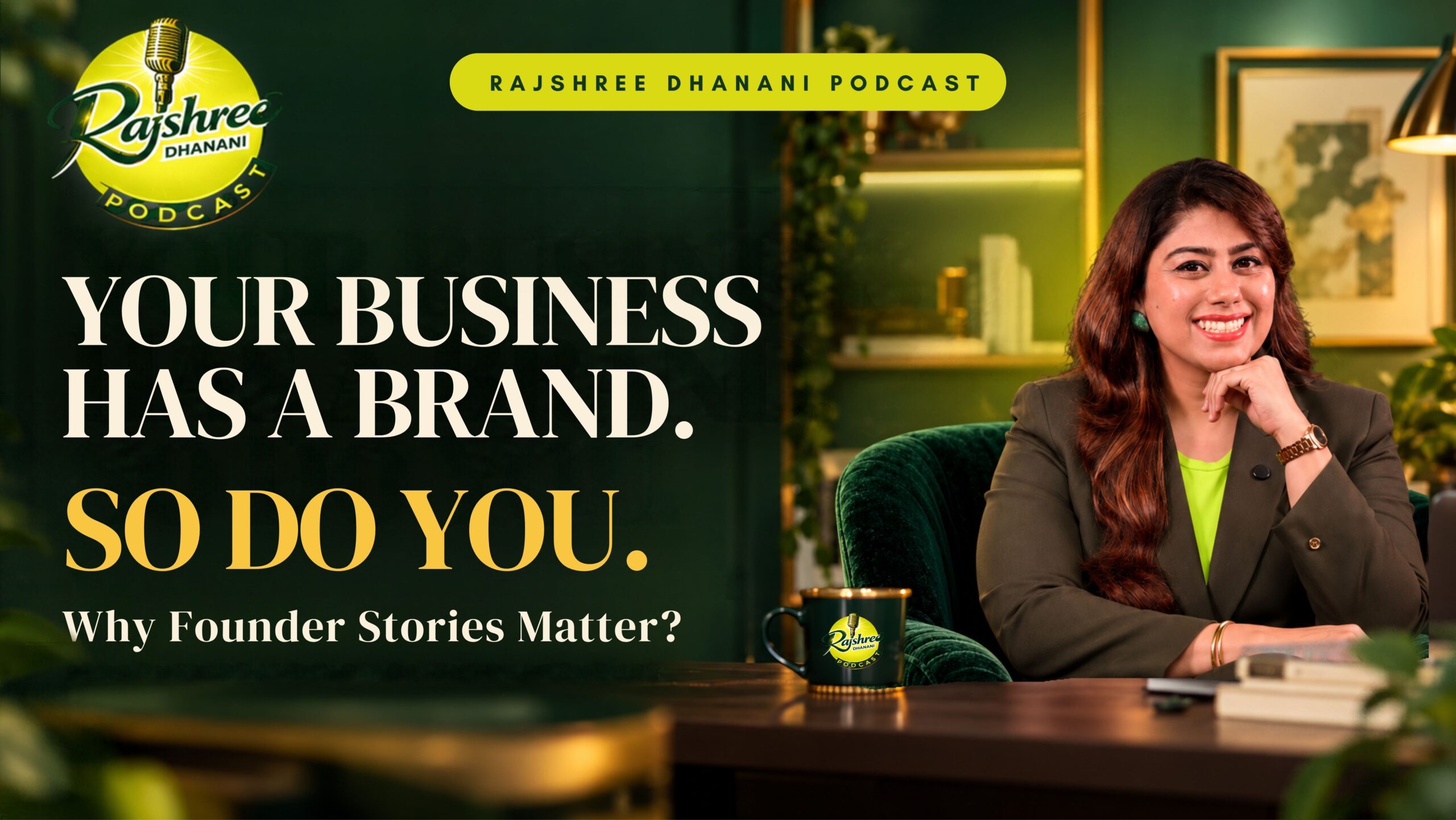
At the Rajshree Dhanani Podcast, conversations with entrepreneurs, founders, business leaders and experts often reveal something a company profile cannot—the thinking, experiences and decisions behind the person building the brand.
What Is Personal Branding for Entrepreneurs?
At its simplest, personal branding for entrepreneurs is the process of building a clear professional identity around the founder.
It answers questions such as:
- What does this entrepreneur know?
- What problems have they solved?
- What does this founder believe in?
- Why did they enter this industry?
- What have they learned from building a business?
- What makes their perspective different?
- Why should people pay attention to their experience?
A personal brand develops whether a founder actively works on it or not.
People form impressions through interviews, social media, public speaking, articles, podcasts, professional conversations and business decisions.
The goal is not to manufacture a personality.
The goal is to communicate the founder’s real experience more clearly.
Entrepreneurs who want to see how different professionals communicate their journeys can explore the founder and business conversations featured on the Rajshree Dhanani Podcast.
Why Personal Branding for Entrepreneurs Matters Today
Modern audiences have access to more businesses, more advertisements and more content than ever before.
That means they also have more choices.
A company advertisement can explain what a business sells. A product page can explain features and benefits. A website can explain services.
But a founder can explain something deeper:
Why the business exists.
When entrepreneurs speak about their industry, business decisions, challenges and lessons, people get context around the company.
That is one of the reasons personal branding for entrepreneurs is becoming increasingly relevant.
The Edelman Trust Barometer has repeatedly examined the role of trust across institutions, businesses and leadership. Research like this highlights why credibility and human communication remain important in how people evaluate organizations and leaders.
A founder does not need to share everything.
But sharing useful professional insights can make the business feel more understandable and human.
Your Company Brand and Personal Brand Are Different
A company brand and a founder’s personal brand should support each other, but they are not the same thing.
A Company Brand Says:
This is what our company provides.
It communicates products, services, benefits, positioning and customer promises.
A Founder’s Personal Brand Says:
This is what I have learned while building and working in this industry.
It communicates experience, perspective, knowledge and professional values.
For example, imagine an entrepreneur who owns an interior design company.
The company website may showcase completed projects.
But the founder can speak about:
- What clients commonly misunderstand about renovation
- How design expectations have changed
- What they learned from difficult projects
- How they select materials
- How they manage budgets
- How they handle disagreements with clients
- What young designers should know before entering the profession
This is why personal branding for entrepreneurs should strengthen the business brand rather than compete with it.
The company explains the service.
The founder explains the thinking behind it.
Founder Stories Make Businesses Easier to Understand
Most businesses have stories that cannot be captured in a two-line About Us section.
Someone noticed a problem.
Someone took a risk.
An early idea failed.
A customer changed the founder’s thinking.
The business had to adapt.
A difficult period created an important lesson.
A surprising opportunity changed the company’s direction.
These are the experiences that make founder stories interesting.
Compare these two statements:
“We have been in business for 15 years.”
And:
“During our first few years, customers kept asking us for something we did not offer. Eventually, we realised the market was telling us where the opportunity was.”
The second version gives people context.
It shows observation, adaptation and decision-making.
Effective personal branding for entrepreneurs often begins with stories like these because they communicate experience instead of simply making claims.
The Conversations section of Rajshree Dhanani Podcast explores this type of journey across entrepreneurs, professionals and business leaders from different industries.
Personal Branding Does Not Mean Becoming an Influencer
One of the biggest misconceptions around founder branding is that entrepreneurs need huge follower counts.
They do not.
A business owner does not have to:
- Post every day
- Follow every social media trend
- Share their entire personal life
- Become a lifestyle creator
- Produce viral videos
- Turn every business moment into content
A strong founder brand can be built around expertise rather than popularity.
A construction entrepreneur can talk about building-material trends.
A doctor can explain common misconceptions in healthcare.
An educator can discuss changes in student behaviour.
A second-generation business owner can explain how a traditional company adapts to modern customers.
A startup founder can talk about product-market mistakes.
A designer can discuss how client expectations have evolved.
These are not influencer topics.
They are professional insights.
That distinction is central to good personal branding for entrepreneurs.
Expertise Has More Value When People Can Discover It
Some professionals have decades of experience but very little digital visibility.
Another professional may have fewer years of experience but consistently explains what they know through articles, videos, podcasts, interviews and professional discussions.
Who is easier to discover?
Usually the second person.
Visibility is not automatically vanity.
For professionals, visibility can simply mean making useful knowledge accessible.
The objective should not be:
“Look at me.”
It should be:
“Here is something my experience has taught me that may help you.”
LinkedIn’s resources on thought leadership and content marketing also emphasise the importance of sharing useful expertise and professional insight rather than relying only on promotional messaging.
That principle works especially well in personal branding for entrepreneurs.
What Should Entrepreneurs Talk About?
A common reason founders avoid personal branding is simple:
They do not know what to post about.
But entrepreneurs encounter useful content ideas almost every day.
1. Lessons From Building the Business
Ask yourself:
- What did I misunderstand when I started?
- What would I do differently today?
- What took longer than expected?
- What decision changed the business?
These are useful founder insights.
2. Industry Knowledge
Talk about what is changing in your sector.
You can discuss:
- New customer expectations
- Common misconceptions
- Industry challenges
- Changing technology
- Emerging opportunities
This establishes expertise without making every post promotional.
3. Customer Problems
What questions do customers repeatedly ask?
What mistakes do buyers make?
What should someone understand before purchasing your product or service?
These are often excellent content topics.
4. Leadership
Founders can discuss:
- Hiring
- Team culture
- Delegation
- Difficult decisions
- Communication
- Business growth
Leadership experiences often contain useful lessons.
5. Failure and Recovery
Not every story needs a perfect ending.
Sometimes a thoughtful explanation of what went wrong is more valuable than another success announcement.
The strongest personal branding for entrepreneurs often comes from real experiences rather than generic motivational content.
6. Values
What matters most in your business?
What will you compromise on?
What will you never compromise on?
Values help audiences understand how a founder thinks.
7. The Founder Journey
Why did you enter this industry?
Was entrepreneurship always the plan?
What moment changed your direction?
Founder journeys often contain the most memorable stories.
The Best Founder Stories Are Specific
Generic advice is easy to forget.
Specific experiences are easier to remember.
Compare:
“Entrepreneurs should listen to customers.”
with:
“For six months, customers kept rejecting our original offering. Instead of defending it, we started asking why. Their answers changed our product.”
The second version feels more real because it has context.
A useful founder-story framework is:
Situation → Challenge → Decision → Learning
For example:
Situation: The business launched a new service.
Challenge: Customers were not responding.
Decision: The founder interviewed existing customers.
Learning: The original positioning solved the wrong problem.
That structure makes business storytelling clearer and more valuable.
Why Conversations Can Reveal More Than Promotional Content
Some ideas are difficult to express through a polished company post.
Conversation changes that.
A thoughtful interviewer can ask:
Why did you make that decision?
What happened next?
What did you learn?
Would you do the same thing today?
What did nobody tell you when you started?
Questions like these often uncover stories that would never appear in corporate communication.
That is why interviews and podcasts can be useful tools for personal branding for entrepreneurs.
They create room for founders to explain how they think.
You can see this question-led approach across the business conversations on Rajshree Dhanani Podcast, where founders, entrepreneurs and experts discuss different parts of their journeys.
One Good Conversation Can Become an Entire Content Ecosystem
A meaningful conversation does not have to remain a single piece of content.
Imagine an entrepreneur participating in one podcast conversation.
Inside that conversation there may be:
- A founder origin story
- A major mistake
- A customer lesson
- A leadership philosophy
- An industry observation
- Advice for younger entrepreneurs
- A personal turning point
Each idea can become a separate content asset.
One Conversation Can Become:
Podcast Conversation
↓
Instagram Reel
↓
YouTube Short
↓
LinkedIn Post
↓
Blog Article
↓
Founder Quote
↓
Website Story
This does not mean publishing identical content on every platform.
Each platform can present the idea differently.
For busy founders, this approach makes personal branding for entrepreneurs easier to maintain because they do not have to invent completely new ideas every day.
One valuable conversation can support weeks of thoughtful content.
Personal Branding Still Needs Boundaries
Being visible does not mean sharing everything.
Founders can decide what belongs in public and what should stay private.
You do not need to discuss:
- Private family matters
- Confidential company information
- Internal disagreements
- Sensitive financial details
- Experiences you do not want to share publicly
A strong personal brand requires clarity, not complete exposure.
The goal is to communicate enough of your professional experience, thinking and values for people to understand what you stand for.
Personal growth and self-awareness also play an important role in how leaders communicate. Rajshree’s Dose of Calm Clarity explores themes such as boundaries, reflection, emotional wellbeing and personal development.
Common Personal Branding Mistakes Entrepreneurs Should Avoid
Trying to Sound Like Everyone Else
If every founder repeats the same motivational advice, nobody becomes memorable.
Your real experience is more useful than borrowed inspiration.
Talking Only About Success
Businesses are built through mistakes, adjustments and uncertainty.
A founder who explains what changed often provides more value than someone who talks only about achievements.
Turning Every Post Into a Sales Pitch
If every piece of content ends with:
“Buy from us.”
audiences eventually lose interest.
Teach first.
Explain first.
Add value first.
Commercial opportunities can follow naturally.
Chasing Virality Instead of Relevance
A business post seen by 500 relevant people may be more useful than a generic video seen by 100,000 unrelated viewers.
Strong personal branding for entrepreneurs should prioritise relevance over vanity metrics.
Posting Without a Clear Point of View
Consistency is not just about posting regularly.
It also means being consistent about what you want to be known for.
Start With Three Personal Brand Pillars
Founders who feel overwhelmed can begin with three content themes.
For example:
Construction Entrepreneur
Building Materials + Entrepreneurship + Digital Transformation
Education Leader
Education + Leadership + Student Development
Healthcare Professional
Patient Awareness + Medical Expertise + Professional Journey
Interior Designer
Design + Entrepreneurship + Client Experience
Startup Founder
Product Development + Business Growth + Customer Learning
These pillars create focus.
A clear structure makes personal branding for entrepreneurs more consistent and helps audiences understand what the founder represents.
You Do Not Need to Tell Your Entire Story at Once
A personal brand is not created by one viral video.
It develops gradually.
One conversation may introduce your journey.
Another may demonstrate expertise.
A short video might explain how you think about customers.
An article may explore an industry challenge.
A podcast may reveal the decisions behind a difficult period.
Together, these pieces create a fuller picture.
That is why consistency matters more than trying to create something dramatic every time.
Where Podcasts Fit Into Personal Branding for Entrepreneurs
Podcasts provide something that short promotional content often cannot:
space to think.
When founders are asked thoughtful questions rather than given a sales script, audiences can understand how they approach business, leadership, problems and growth.
This is also part of the philosophy behind the Rajshree Dhanani Podcast, a Kolkata-based business podcast featuring conversations with entrepreneurs, founders, professionals and industry experts.
Rather than treating every guest conversation as only one long interview, the platform follows a focused, question-led and reel-first format.
One conversation can explore several parts of a person’s journey:
- Entrepreneurship
- Leadership
- Expertise
- Business challenges
- Resilience
- Personal development
- Brand building
Those interested in the person behind the platform can learn more about Rajshree Dhanani and her journey as an entrepreneur and podcast host.
You can also explore the Business Podcast West Bengal page to understand the broader regional positioning of the platform.
Your Story Is Part of Your Business
Personal branding cannot replace a strong product.
It cannot compensate for poor service.
And a good founder story cannot permanently hide a weak business.
But when a strong business is supported by a founder who communicates clearly, people can understand both:
What the company does
and
Who is building it
That combination can help create familiarity, credibility and stronger professional relationships over time.
The objective of personal branding for entrepreneurs should not simply be fame.
It should be becoming recognisable for something meaningful.
Final Thoughts
Every entrepreneur already has a story.
The real question is whether that story is being communicated thoughtfully.
Your failures may contain lessons.
Your customer conversations may contain insights.
Your industry’s everyday problems may contain useful ideas.
Your decisions may help another entrepreneur think differently.
Your experience may help people understand the person behind your company.
Done consistently, personal branding for entrepreneurs can turn years of experience into useful, searchable and credible content.
It is not simply about posting more.
It is about creating clarity around your:
Experience.
Expertise.
Perspective.
Values.
You do not need to become an influencer.
You need to communicate what you genuinely know.
And sometimes, the best place to begin is simply with the right conversation.
Have a Founder Story Worth Sharing?
The Rajshree Dhanani Podcast brings together entrepreneurs, founders, business leaders and experts for meaningful conversations about business, leadership, professional journeys, personal growth and the experiences behind a brand.
If you have built something, learned something or developed expertise worth sharing, your story could become a conversation that helps people understand both your journey and your brand.
Book Your Podcast Appearance
Explore Founder & Business Conversations
About Rajshree Dhanani
Linkedin – Rajshree Dhanani Podcast
Youtube – Rajshree Dhanani Podcast
Rajshree Dhanani Podcast
Where Entrepreneurs Build Their Brand.