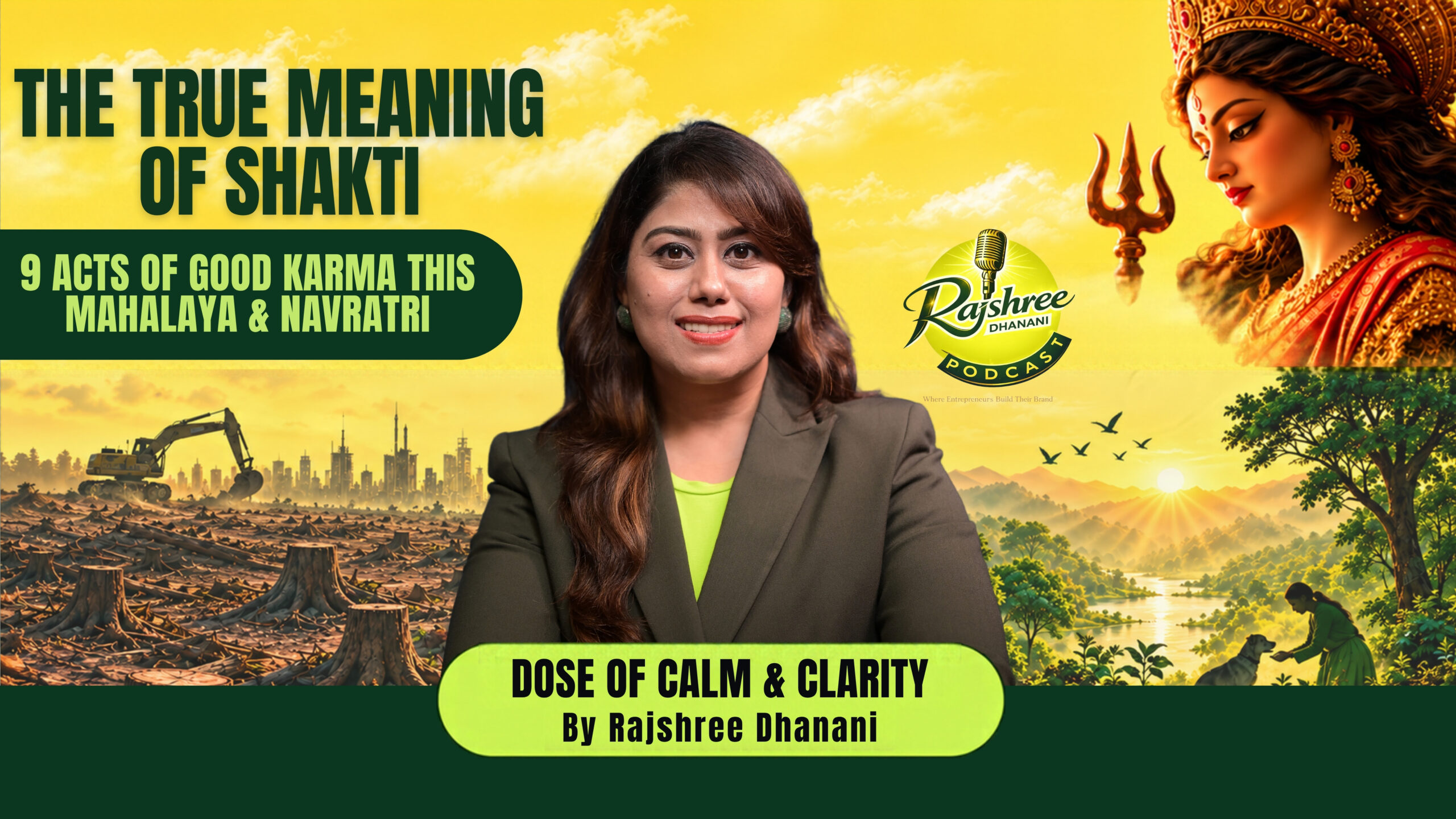
Every Mahalaya morning carries a familiar emotion.
The sound of the conch shell, the fragrance of shiuli flowers, the early morning prayers and the timeless voice of Mahishasuramardini remind us that Durga Puja is approaching.
Across Bengal, homes begin preparing to welcome Maa Durga. There is excitement, devotion, tradition and a sense of new beginnings.
But amid these celebrations, there is a question worth asking.
We worship Shakti. But are we protecting what Shakti has created?
We pray for strength, yet sometimes remain silent when someone needs our help. We celebrate the beauty of creation, yet continue damaging the environment around us. We ask for peace, yet allow anger, hatred and negativity to influence our decisions.
Perhaps the true meaning of Shakti is not limited to the power we worship. It is also reflected in the way we choose to live.
This Mahalaya and Navratri, let us look beyond the celebrations and discover how good karma, kindness, environmental responsibility and humanity can become expressions of our inner strength.
What Is the True Meaning of Shakti?
In Hindu spiritual traditions, Shakti represents divine feminine power, energy and the creative force of existence.
Maa Durga is revered as a powerful manifestation of this divine energy. Her victory over Mahishasura symbolises the triumph of good over evil.
But the symbolism also invites personal reflection.
What if the battles we need to fight are not always against something outside us?
What if they involve the anger we refuse to control, the jealousy we carry, the injustice we choose to ignore or the selfishness that prevents us from helping someone?
The true meaning of Shakti can inspire us to transform our own actions.
Strength is not only the ability to defeat an enemy. It is also the courage to defend the vulnerable, protect what is valuable and create something meaningful.
And that understanding becomes especially relevant during Mahalaya and Navratri.
Mahalaya and Navratri: A Time for Spiritual Reflection
Mahalaya holds a special place in Bengali culture.
It is traditionally associated with remembrance of ancestors and the transition toward Devi Paksha, the period connected with the worship of the goddess.
The morning’s familiar devotional sounds carry generations of memories.
For many families, Mahalaya is more than an announcement that the festivities are beginning. It is a moment of emotional and spiritual connection.
Navratri, too, celebrates the divine feminine across nine nights of worship and reflection.
These traditions have profound religious significance. They can also inspire a simple personal question:
How can we honour the values we celebrate through the decisions we make every day?
Worship and responsible action need not compete with one another.
Prayer can inspire gratitude. Gratitude can encourage responsibility. And responsibility can become meaningful action.
The following nine acts of good karma offer ways to carry that inspiration into everyday life.
9 Acts of Good Karma That Reflect True Shakti
1. Protect Nature Instead of Taking It for Granted
We admire Maa Durga as a symbol of life, energy and creation.
But how often do we think about the natural world that sustains us?
Forests provide habitats for wildlife. Rivers support communities and ecosystems. Trees offer shade, help improve local environments and form an essential part of the living world.
Protecting nature does not always require a grand campaign.
It can begin with a small decision.
Choose reusable materials. Avoid littering. Care for an existing tree. Support a local environmental initiative. Speak up when natural spaces in your community are being damaged.
The United Nations Environment Programme encourages reducing waste, reusing resources and adopting responsible consumption practices.
If we celebrate creation as sacred, protecting the natural world is one meaningful way to express that respect.
Good karma begins when appreciation becomes responsibility.
2. Help a Human Being Without Expecting Recognition
Sometimes the greatest acts of strength are the quietest.
Helping an elderly person cross a busy road, supporting a family through difficult circumstances or listening to someone who feels unheard may not receive public attention.
But these actions matter.
In a world where kindness is sometimes performed for social media, genuine compassion asks for something different.
It asks us to care even when nobody is watching.
You do not need wealth, influence or a large platform to help another person.
Sometimes your time, patience or willingness to listen is enough to make someone feel supported.
The World Health Organization highlights the importance of meaningful social connections and supportive relationships for human wellbeing.
Humanity becomes stronger when compassion becomes a habit rather than an occasional gesture.
3. Replace Destructive Thoughts With Constructive Actions
Anger is a human emotion.
But what we choose to do with anger determines whether it becomes harmful or constructive.
It is easy to criticise, spread negativity or react impulsively.
Building solutions requires patience.
When something goes wrong, ask yourself:
- Am I contributing to the problem?
- Can I respond without humiliating someone?
- What practical solution can I offer?
- Will my next action create harm or progress?
Being constructive does not mean staying silent about injustice.
It means choosing responses that protect people, challenge harmful behaviour and work toward meaningful change.
In the Dose of Calm & Clarity reflection How to Protect Your Peace from Negative People, Rajshree Dhanani explores how awareness and emotional boundaries can help us respond thoughtfully.
The ability to pause before reacting is not weakness.
It is a valuable form of inner strength.
4. Celebrate Durga Puja With Environmental Responsibility
Durga Puja is a celebration of devotion, artistry and community.
From beautifully crafted idols to intricate pandals, the festival represents an extraordinary cultural tradition.
Its recognition by UNESCO as Intangible Cultural Heritage reflects the significance of Kolkata’s Durga Puja.
But beautiful celebrations should also consider their environmental impact.
Choose reusable decorations wherever possible. Reduce unnecessary plastic consumption. Dispose of waste responsibly and support organisers who follow environmentally responsible practices.
For idol immersion, follow local authority arrangements and environmental guidelines rather than disposing of worship materials into natural water bodies.
India’s Central Pollution Control Board has issued guidance on environmentally responsible idol immersion and festival waste management.
Respecting tradition and protecting the environment can go hand in hand.
A celebration becomes more meaningful when its beauty does not come at an unnecessary cost to nature.
5. Choose Humanity Over Hatred
We live in a world where differences can easily become divisions.
People may disagree about religion, language, lifestyle, identity or personal beliefs.
But disagreement does not need to destroy respect.
Humanity asks us to recognise dignity in every person.
It asks us to reject cruelty, challenge discrimination and avoid turning others into enemies simply because they think differently.
The idea of Shakti can remind us that power carries responsibility.
A strong person does not need to humiliate someone who is vulnerable.
A confident person does not need to spread hatred to prove a point.
And a compassionate society does not measure human worth solely by wealth, position or background.
This Navratri, let us celebrate courage together with kindness.
Because true strength protects human dignity.
6. Respect the People Who Make Our Celebrations Possible
Behind every beautiful Durga Puja celebration are countless working hands.
Artists sculpt the idols. Craftspeople create decorations. Electricians install lighting. Workers build pandals. Cleaners maintain public spaces. Volunteers help manage crowds.
Their work makes the festival possible.
Yet their contributions can become invisible once the celebrations begin.
This Mahalaya, look beyond the finished decorations and appreciate the people behind them.
Treat workers respectfully. Pay fairly and on time when you employ someone. Follow safety arrangements and avoid creating unnecessary risks for those working at festival sites.
An expression of gratitude may seem small, but consistent respect is more meaningful than praise offered only during special occasions.
Shakti is also reflected in the dignity of labour and the courage to recognise every person’s contribution.
7. Use Your Voice to Uplift, Not Humiliate
Words have consequences.
A careless comment can discourage someone who is already struggling. A cruel social media post can turn a disagreement into public humiliation.
But words can also encourage, educate and bring people together.
Before posting or sharing something, consider whether it is accurate, necessary and respectful.
If you disagree with someone, challenge the idea without attacking their dignity.
If you see harmful misinformation, respond with reliable information rather than adding more hostility.
If someone is working toward a positive goal, encourage them.
For young people especially, digital platforms provide opportunities to build communities, share knowledge and inspire action.
Use that opportunity constructively.
Your voice is a form of influence. How you use it reveals your values.
8. Turn Your Privileges Into Opportunities to Serve
Not everyone has the same access to education, safety, opportunity or support.
Recognising this should encourage responsibility rather than guilt.
If you have knowledge, share it.
If you have professional experience, mentor someone who could benefit from it.
If you have resources to spare, support a credible community initiative.
If you lead a business, consider how your decisions affect employees, customers and the surrounding community.
You do not have to solve every problem.
Choose one issue where your abilities can make a practical difference.
Meaningful service is not measured only by the size of a donation.
It can also be reflected in consistency, respect and the willingness to act when help is needed.
9. Make Good Karma a Daily Practice
Festivals inspire reflection, but their lessons do not have to end when the celebrations finish.
Anyone can make a positive promise on an important day.
The greater challenge is keeping that promise afterwards.
Protecting nature only during a festival will not solve environmental problems.
Speaking about kindness without practising it will not strengthen relationships.
And celebrating positive values without applying them will not create lasting change.
Choose one meaningful action you can repeat.
Help someone regularly. Reduce waste in your household. Volunteer when possible. Be more thoughtful during disagreements.
Over time, these decisions become habits.
And those habits shape our character.
The true meaning of Shakti becomes visible when our everyday actions reflect the values we celebrate.
Why Good Karma Matters Beyond Mahalaya and Navratri
Good karma is often understood through spiritual beliefs about actions and their consequences.
In a practical, everyday sense, it can also remind us to take responsibility for what we contribute to the world.
Every day, we make decisions that affect other people.
Some decisions create trust. Others damage it.
Some choices help protect our surroundings. Others create unnecessary waste.
Some words offer hope. Others deepen division.
We cannot control every outcome, but we can become more conscious of our intentions and behaviour.
The purpose is not to expect an immediate reward for every good deed.
It is to develop a way of living grounded in compassion, responsibility and self-awareness.
This is also the spirit behind Dose of Calm & Clarity by Rajshree Dhanani, a series of reflections exploring personal growth, emotional wellbeing and social awareness.
Because a clearer mind can help us make more thoughtful choices.
And thoughtful choices can become constructive action.
A Message for the Younger Generation: Become Creators, Not Destroyers
The next generation has extraordinary opportunities to shape the future.
Technology, education, entrepreneurship and digital communication provide new ways to solve problems and contribute to communities.
But meaningful change requires more than expressing frustration.
It requires the discipline to learn, the courage to question and the patience to build.
Instead of spreading hatred, create understanding.
Instead of damaging public property, develop solutions.
Instead of dismissing someone else’s struggles, look for ways to help.
Use your creativity to protect nature, improve communities and support ideas that serve people.
The world does not need everyone to think alike.
It needs more people willing to disagree responsibly and work toward solutions.
Destruction may be quick. Building something valuable takes courage.
Frequently Asked Questions
What is the true meaning of Shakti during Navratri?
In Hindu traditions, Shakti represents divine feminine energy and power. During Navratri, worship of the goddess can also inspire reflection on courage, compassion, responsibility and the importance of overcoming harmful tendencies.
What is the spiritual significance of Mahalaya?
Mahalaya is associated with remembrance of ancestors and the transition toward Devi Paksha. In Bengal, it also holds deep emotional and cultural significance as Durga Puja approaches.
How can we practise good karma during Durga Puja?
You can practise good karma through acts of kindness, helping people in need, respecting workers, reducing waste, protecting nature and choosing responsible behaviour during celebrations.
How are Shakti and humanity connected?
As a personal interpretation, the values associated with Shakti can encourage us to use our strength constructively, protect vulnerable people and act with courage and compassion.
Final Thoughts: Awaken the True Shakti Within You
This Mahalaya and Navratri, celebrate the traditions that bring families and communities together.
Welcome Maa Durga with devotion, gratitude and joy.
But also take a moment to reflect on how you are using your own strength.
Are you protecting the environment that sustains life?
Are you showing kindness to people who need support?
Are you replacing unnecessary negativity with meaningful action?
Are you contributing something positive to the world around you?
We may not be able to change everything in a single day.
But we can begin with one decision.
One act of kindness.
One responsible choice.
One constructive action.
And perhaps that is a beautiful way to honour the spirit of Shakti.
True strength lies in protecting, creating, serving and uplifting others.
This reflection is part of Dose of Calm & Clarity with Rajshree Dhanani.
Pause. Reflect. Reconnect.
This Mahalaya, don’t just celebrate Shakti. Awaken the Shakti within you.