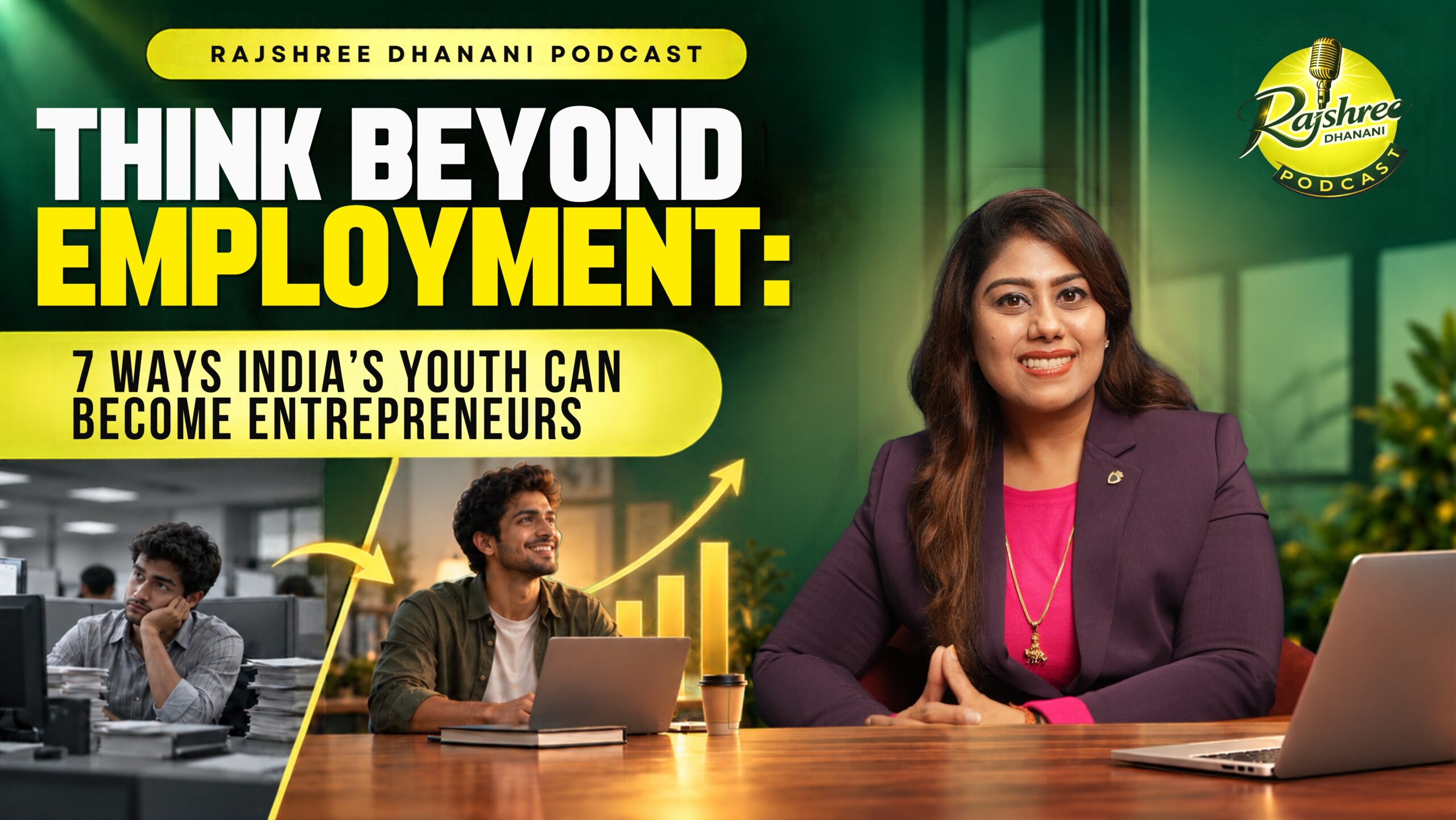
What if India’s next generation stopped thinking only about finding jobs and started thinking about creating them?
For decades, young Indians have been encouraged to study hard, earn degrees, and secure stable employment. While a good job offers financial security, entrepreneurship opens another exciting door: the opportunity to build something meaningful, solve real problems, and create employment for others.
Today, young entrepreneurs in India can access digital platforms, online learning, affordable business tools, and expanding startup communities. Starting a business is no longer an opportunity reserved only for people with significant capital or powerful connections.
Whether you’re a student, working professional, or aspiring founder wondering “Business kaise shuru karein?” (How do I start a business?), the journey begins with the right mindset and practical action.
Here are 7 powerful ways India’s youth can become entrepreneurs and transform their ideas into real businesses.
1. Develop an Entrepreneurial Mindset: Think Like a Creator
Every successful business begins with a different way of thinking.
While an employee primarily focuses on fulfilling responsibilities within an organization, entrepreneurs must also identify problems, develop solutions, and take responsibility for results.
This doesn’t mean employment is less valuable. In fact, working in an organization can teach valuable lessons about customers, operations, teamwork, and leadership.
The real transformation begins when young people start observing opportunities around them.
How to Develop an Entrepreneurial Mindset
- Identify three everyday problems people frequently experience.
- Observe how existing businesses solve those problems.
- Ask whether you can offer a simpler, faster, or more affordable solution.
- Practice making decisions and taking calculated risks.
Remember: You don’t need a revolutionary idea. You need a genuine problem worth solving.
2. Focus on Practical Skills, Not Just Academic Degrees
A university degree can help you begin your career, but practical business skills are essential for becoming an entrepreneur.
Communication, financial literacy, marketing, negotiation, problem-solving, and leadership can all influence how successfully a business operates.
Fortunately, many of these skills can be developed without spending a fortune.
Students can participate in internships, freelance projects, college business competitions, and online learning programs.
Essential Skills for Young Entrepreneurs
Digital marketing: Learn how to promote products through social media, search engines, and content creation.
Financial literacy: Understand pricing, expenses, profit margins, and cash flow.
Communication: Learn to present ideas, negotiate with suppliers, and build customer relationships.
Leadership: Develop the confidence to make decisions, accept feedback, and work with different people.
The Government of India’s Startup India Learning Program is one resource offering free online entrepreneurship education.
The takeaway: Your qualifications may open opportunities, but your skills help you turn opportunities into businesses.
3. Turn Everyday Problems into Profitable Business Ideas
Some of the most useful business ideas begin with simple questions.
Why is a local service so expensive? Why do customers struggle to find reliable products? Why do small shops still face difficulties managing online orders?
These questions can reveal business opportunities.
For example, a student might help local retailers establish an online presence. Someone interested in food might explore a niche home-based catering service. A technology enthusiast might develop a simple tool that reduces repetitive business tasks.
The key is to focus on customer needs before investing money.
How to Validate Your Business Idea
Before launching, speak with potential customers and understand their problems.
Ask what solutions they currently use, what frustrates them, and whether they would genuinely pay for an alternative.
Build a simple prototype or test service and collect honest feedback.
A good business idea isn’t just something you love. It’s something customers find valuable enough to purchase.
4. Start Small, Test Your Idea, and Grow Smart
One of the biggest misconceptions about entrepreneurship is that starting a business requires huge investment.
Many service-based businesses can begin with relatively modest resources.
Freelancing, digital marketing services, tutoring, content creation, consulting, and specialized online stores are possible starting points, depending on your skills and market demand.
For young people thinking, “Naukri ke saath business kaise shuru karein?” (How can I start a business alongside my job?), testing a small venture before leaving employment may be a practical approach.
For example, someone planning to launch a clothing brand could start with a limited collection, showcase products online, and assess customer demand before ordering large quantities.
Follow the Small-Start Approach
- Choose one product or service.
- Define your ideal customer.
- Test a small offering with a realistic budget.
- Track customer response, costs, and revenue.
- Expand only when you see consistent demand.
Think big, but start responsibly. Sustainable growth matters more than impressive launch announcements.
5. Build Financial Discipline and Business Knowledge
A creative idea can attract attention, but financial discipline helps a business survive.
Aspiring entrepreneurs should understand the difference between revenue and profit, maintain accurate financial records, and avoid spending money simply to appear successful.
Start by preparing a basic budget covering business expenses, expected sales, and emergency reserves.
Keep personal and business finances separate, and understand applicable registration and tax requirements.
For eligible micro, small, and medium enterprises, the Government of India’s Udyam Registration Portal offers free MSME registration.
However, registration requirements, financing eligibility, and government benefits vary depending on the business structure and activity.
Financial independence begins with financial responsibility.
A business that earns modest but consistent profits can be healthier than one generating impressive sales while constantly running out of cash.
6. Learn from Mentors, Founders, and Startup Communities
Entrepreneurship doesn’t have to be a lonely journey.
One of the smartest decisions a young founder can make is learning from people who have already experienced the challenges of business ownership.
Connect with entrepreneurs, attend networking events, seek guidance from mentors, and participate in startup communities.
India also has entrepreneurship-support initiatives such as the Atal Innovation Mission, which works to encourage innovation and entrepreneurship through programs and incubation networks. Availability and eligibility depend on the program.
Business podcasts can be especially valuable because founders share experiences that textbooks often cannot capture.
The Rajshree Dhanani Podcast brings entrepreneurial journeys, business challenges, leadership lessons, and personal growth into meaningful conversations.
Hearing how real entrepreneurs handle rejection, manage uncertainty, and build customer trust can help aspiring founders make better decisions.
Learn from experience, not just success stories. The mistakes entrepreneurs discuss can be just as valuable as their achievements.
7. Build Confidence, Embrace Failure, and Keep Innovating
Starting a business doesn’t guarantee immediate success.
Customers may reject your first offering. Marketing campaigns might fail. Competitors may enter your market, and unexpected expenses can disrupt your plans.
These challenges do not automatically mean the business idea has no future.
Successful founders learn to review evidence, listen to customers, adjust their strategies, and recognize when a particular approach isn’t working.
For Bengali-speaking aspiring founders asking, “Nijer business kibhabe shuru korbo?” (How do I start my own business?), remember that confidence develops through preparation and experience, not simply through motivation.
Set achievable goals, celebrate small milestones, and remain open to new ideas.
Personal branding also matters. Sharing your entrepreneurial journey can help customers understand your values and establish credibility over time.
For inspiration, explore how startup founders can turn their business journey into a powerful brand story.
Don’t wait until you feel completely ready. Prepare carefully, take a manageable first step, and keep learning.
Frequently Asked Questions About Youth Entrepreneurship in India
Can students become entrepreneurs in India?
Yes. Students can explore businesses alongside their studies, depending on their available time, resources, and applicable legal requirements. Freelancing, tutoring, digital services, and small online ventures are possible starting points.
How much money is needed to start a small business?
There is no universal minimum investment. A service-based business may require relatively little upfront spending, while manufacturing or physical retail generally requires more capital. Research expenses and customer demand before committing funds.
Is entrepreneurship better than a regular job?
Neither is automatically better. Employment provides experience and income stability, while entrepreneurship offers ownership and different financial risks. The right path depends on individual goals, responsibilities, and circumstances.
Conclusion: India’s Future Needs More Opportunity Creators
India’s progress depends on both skilled professionals and visionary entrepreneurs.
Entrepreneurship is not simply about becoming your own boss. It is about identifying problems, developing innovative solutions, building sustainable businesses, and creating value for society.
Young Indians who develop practical skills, maintain financial discipline, and remain willing to learn can contribute to a stronger entrepreneurial ecosystem.
But building a business is only one way to contribute to the country’s future. Explore our article, How Youth Can Build a Better India: 10 Powerful Actions, to discover other meaningful ways young people can make a difference.
The next successful Indian business could begin with one small idea and one young person willing to think beyond employment.
Don’t just wait for opportunities. Learn to create them.